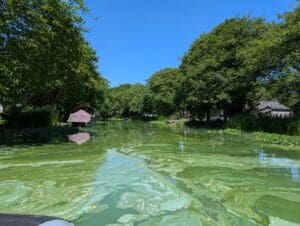
Each October, we highlight the science and stories behind lake management across the region. For our very last stop, we leave Seattle and travel out to the Pacific coast and visit the City of Ocean Shores. Let’s take a closer look at how science and collaboration are shaping the lake’s future.What’s Fueling Toxic Algae in Ocean Shores? The 23-mile freshwater system in Ocean Shores is a beloved community asset, offering recreation, habitat, and scenic beauty, all on a narrow peninsula between the Pacific Ocean and Grays Harbor. But in recent years, harmful algae blooms have made these waters unsafe to swim in and difficult to enjoy. The culprit? Cyanobacteria. Fueled by high phosphorus levels from groundwater, surface runoff, and sediment cycling. Herrera partnered with the City of Ocean Shores to develop a Fresh Waterways Algae Management Plan that blends science, community input, and adaptive strategies. The goal: reduce toxic blooms and restore safe, usable waterways.
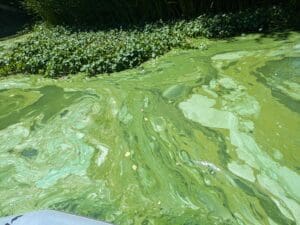
A classic bloom of Microcystis cyanobacteria, observed in Lake Minard on September 24, 2024.
Understanding the problem Cyanobacteria thrive in nutrient-rich conditions. Monitoring found phosphorus levels up to 75 times higher than what’s considered safe for healthy lakes. Most of the nutrients come from natural sources, especially ancient peat soils that leak phosphorus into groundwater. Because coastal soils are so permeable, groundwater flows easily into the lakes and canals. Even with past upgrades to septic and stormwater systems, the waterways are still overloaded with nutrients and prone to algae growth.
Turning the tide – a tailored approach Rather than one-size-fits-all, the plan divides the waterways into nine management units, each with its own strategy. To reduce algae and improve water quality, alum treatments will be used to lock up phosphorus in key lakes and canals. Oxygenation systems and circulation devices will keep sediments from releasing more nutrients and toxic algae from accumulating at the surface. In the finger canals, pilot studies will test how well treatments like algaecides and nanobubbles work. Additional projects in the watershed will help cut down on phosphorus from stormwater and sewage. Looking ahead The recommended strategy costs $11 million over 20 years, with funding expected from grants and utility budgets. It’s a significant investment-but one that reflects Ocean Shores’ commitment to science-based, community-driven waterway restoration. Our subconsultant, FCS found that the City is in a strong fiscal position to fund the recommended plan, through the Stormwater Utility Rate Study they conducted. Community at the center The plan emphasizes public health and communication. Weekly bloom surveillance, clear signage, and outreach to residents and seasonal visitors will help reduce exposure risks. A shoreline stewardship program will guide landowners in reducing runoff and restoring habitat. At Herrera, we’re not just treating symptoms. We’re designing a system that can adapt, evolve, and stay resilient. ______________________________________________________________________ Contributing Author: Katie Rodriguez
Sunlight glistens off the surface of Lake Minard during Herrera’s water quality monitoring of the Fresh Waterways.