
“Dry January”, Herrera Style: Spotlight on Missoula and Casper Projects
By Dani Backman
This January, we’re taking a creative spin on the popular trend by highlighting work from two of our driest offices: Missoula, MT, and Casper, WY. These regions may lack humidity, but they’re rich in opportunities for innovative solutions.
Missoula: Stormwater Solutions in a Dry Climate
Montana’s climate ranks among the driest in the continental U.S., with relative humidity averaging 30–50%. Despite the semi-arid climate, there is plenty of stormwater to manage, for which our Missoula team develops plans and designs.
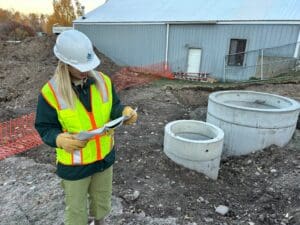
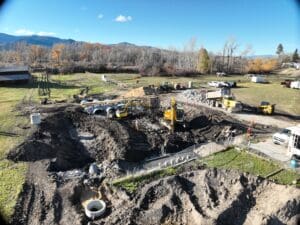
Herrera is supporting the City of Missoula with improvements to the Bitterroot outfall of the South Hills storm drain system, which conveys snow melt and heavy storms through the City. This project addresses deferred maintenance, sediment buildup, and capacity issues. Our team began with a site survey and alternatives analysis, then prepared a preliminary engineering report (PER), assisted with permitting, and designed improvements including swale restoration, a sediment trap for treatment, and upsized culvert crossings. Construction began in summer 2025, and Herrera continues to provide construction administration services to ensure long-term system resilience.
Casper: Reclaiming Wyoming’s Minelands
Casper’s semi-arid climate brings 220 days of sunshine each year. Here, Herrera partners with the Wyoming Department of Environmental Quality’s (WDEQ) Abandoned Mine Land (AML) Program, which mitigates hazards and repairs environmental damage from historic mining.
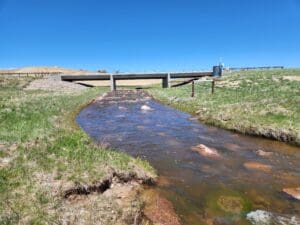
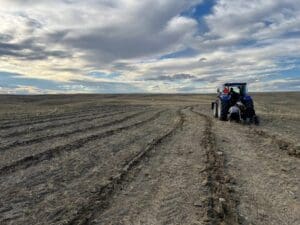
Our team has led reclamation efforts at the Shirley Basin site, which spans 775 acres of abandoned mine lands. Using GeoFluve™ and Carlson Natural Regrade™ software, we designed stable, natural landforms and oversaw regrading, revegetation, and stabilization with locally adapted species to reduce erosion and protect the Little Medicine Bow River. Beyond engineering design, Herrera managed construction oversight, QA/QC, and stakeholder engagement, ensuring compliance and collaboration at every step.
Herrera continues advancing restoration at the site’s 500 and 600 tailings piles. Our expertise includes uranium waste pile reclamation, multi-season drilling campaigns, radiometric logging, and NEPA clearance coordination. These efforts restore ecological function, reduce contamination risks, and support sensitive species like greater sage-grouse within priority habitats.
From stormwater systems in Montana to mine reclamation in Wyoming, Herrera’s work in dry climates reflects our commitment to science-informed, equity-centered solutions. As climate pressures grow, we’ll continue advancing resilient designs that protect communities and ecosystems alike.
Posted In:
Environmental, Montana, News, Reclamation, Restoration, Stormwater, Wyoming