
Water Science Staff Spotlight
By Dani Backman
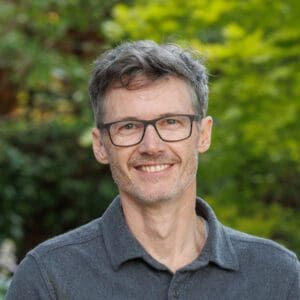
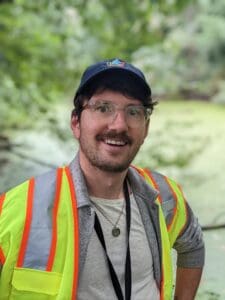
Dylan (L) and Clark (R)
At Herrera, turning environmental data into decisions that improve lakes, streams, watersheds, and communities happens through collaboration across disciplines and decades of experience. In this staff spotlight, we’re highlighting Dylan Ahearn, PhD, Director of Science in the Water Group and Director of Information Systems, and Tim Clark (Clark), a Senior Scientist in the Water Group. Together, they bring decades of experience in water quality, limnology, watershed science, emerging contaminants, and environmental data analysis. We asked Dylan and Clark to share more about their work, the projects that have challenged them most, and the issues shaping the future of water quality science.
What is your role at Herrera?
Dylan – “I’ve been at Herrera for 21 years, my whole career! Currently I am the Director of Science in the Water Group and Director of Information Systems (I run I.T. 😊). I am also self-designated cheerleader and offerer of (hopefully informed) opinions.”
Clark – “I’ve been at Herrera for about four years and currently serve as a Scientist V in the Water Group. My work focuses on limnology, water quality, watershed science, and emerging contaminants, like 6PPDQ and PFAS. Most of my projects involve helping clients understand what’s happening in lakes, streams, and watersheds, why it’s happening, and what they can realistically do about it.”
What has been your most interesting or technically challenging project at Herrera?
Both Dylan and Clark highlighted projects that combine science, data, and decision-making at large scales.
Dylan – “I am currently working with Brandi Lubliner at the City of Tacoma to implement the largest stormwater contaminant of emerging concern study in Washington’s history. We are working on developing methods as the study progresses and learning so much along the way. This dataset will be used for years to come, so I am very proud to be on the team for this SAM-funded effort.”
Clark – “One of the most interesting projects I’ve worked on is developing watershed-scale tools to evaluate stormwater contaminant risks to sensitive aquatic resources and help prioritize management actions for Pierce, Thurston, and King counties, and Oregon Metro down here in the Portland area.”
A common challenge in this work is balancing complexity with usability. Environmental systems are complicated, yet clients need transparent and defensible approaches for focusing limited resources where they can have the greatest impact.
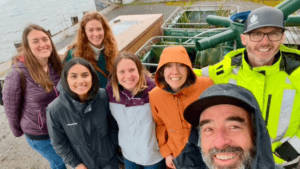
Dylan (back right) and colleagues in the field.
How do you collect and use environmental data to support client decisions?
Much of Dylan’s work centers on collecting and managing the data that support those decisions.
Dylan – “We collect A LOT of data across my projects, but it falls into two main bins: quantity and quality.”
That means collecting information such as rainfall, water levels, flow rates, and velocity, alongside water and sediment samples analyzed for nutrients, metals, PFAS, 6PPDQ, microplastics, and other pollutants. Dylan notes that some of the trickiest data to collect are field-based measurements, where changing weather and site conditions can create unexpected challenges. Making sense of that information is where technology and science come together.
Dylan – “Over the past four years, we have revolutionized our data management and presentation. Now everything is pushed to the cloud where we have both enterprise and bespoke software solutions to organize, standardize, QA, audit, and visualize our data.”
The result is real-time dashboards, improved quality control, and faster access to insights that support client decisions. Combined with advanced statistics and strong experimental design, those tools help teams uncover patterns and deliver meaningful recommendations.
What are the most important indicators you look at when assessing lake health?
A systems-based perspective shapes how Clark approaches lake assessments.
Clark – “There is no single indicator that tells the whole story, so we look at several measures together.”
While algal blooms and invasive aquatic plants are often the most visible signs of stress, they are frequently symptoms rather than the root cause of a problem. To better understand lake health, Clark looks at water clarity, nutrient concentrations, dissolved oxygen, temperature, chlorophyll-a, and algal community composition, along with how those conditions change over time. Understanding those patterns helps identify the processes affecting lake health and informs strategies that address underlying causes rather than symptoms.

Clark (L) and colleagues collecting samples in the field.
What emerging issues should clients be paying attention to?
Looking ahead, both see emerging contaminants and evolving regulations continuing to shape client needs across the Pacific Northwest.
Dylan – “Nitrogen and 6PPDQ management are going to be driving our regulations moving into the future in Western Washington.”
Dylan points to increasing focus on Puget Sound nutrient reduction, watershed planning, expanded monitoring, and long-term nutrient management. He also notes that 6PPDQ has rapidly emerged as one of the most important stormwater contaminants affecting salmon recovery and transportation infrastructure.
Clark sees a related challenge emerging as environmental monitoring programs continue to expand.
Clark – “Agencies and communities are collecting more environmental data than ever before, but turning that information into actionable decisions is still a challenge.”
Whether addressing streamflow restoration, lake management, watershed planning, emerging contaminants, or climate resilience, clients increasingly need tools that help them prioritize actions and investments. Clark believes Herrera is well-positioned to meet that need by bringing together scientists, engineers, planners, and data specialists to approach problems from multiple angles.
What is your favorite part of the job and why?
Both Dylan and Clark are drawn to challenging work, but what keeps them engaged is the opportunity to solve problems alongside colleagues and clients.
Dylan – “One thing that has remained constant is working with my colleagues and clients to figure out solutions to tough problems. It is amazing what you can do when you get a bunch of smart people together and give them a deadline.”
Clark – “One of my favorite parts of the job is solving environmental puzzles. Rarely does the universe provide us with a straightforward problem and an obvious solution.”
For Clark, every watershed comes with its own set of variables, data gaps, and competing priorities. Working through that uncertainty with clients and teammates is part of what makes each project unique.
Looking Ahead
Whether they are collecting field data, evaluating watershed conditions, developing decision-support tools, or helping clients prepare for emerging regulatory challenges, Dylan and Clark share a common goal: turning science into information people can use. Their work reflects Herrera’s commitment to combining technical expertise, curiosity, and collaboration to help clients navigate complex environmental challenges and support healthier watersheds for future generations.
Posted In:
Environmental, Oregon, People, Subject Matter Expert, Washington, Water, Water Quality