
Protecting Our Waters: How Herrera Helps Local Governments Meet Permit Requirements to Reduce Pollutants in Stormwater
Managing urban runoff is critical to protecting our communities and receiving waters. Heavy rainfall can overwhelm sewer and stormwater systems, leading to flooding, while every raindrop that hits a road, roof, or parking lot might carry pollutants into our lakes, rivers, creeks, and wetlands.
This is why cities and counties throughout Washington must comply with federal and state stormwater permit requirements—but navigating those requirements is easier said than done.
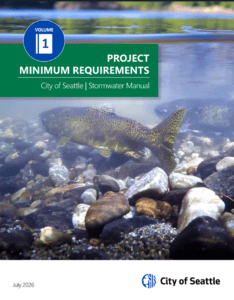
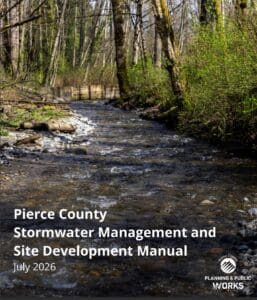
That’s where Herrera comes in. Herrera has played an integral role in the evolution of stormwater management, and we have a decades-long history of helping permittees comply with the municipal, industrial, and construction stormwater permit requirements of the National Pollutant Discharge Elimination System (NPDES) program. Most recently, Herrera supported updates to two municipal stormwater management programs that took effect this month: the 2026 City of Seattle Stormwater Code and Manual and the 2026 Pierce County Stormwater Management and Site Development Manual (Pierce County Stormwater Manual).

Why do stormwater management programs need to be updated?
The science of stormwater management is always evolving. As new findings and technologies emerge, it’s important for local governments to keep up. To that end, the Washington State Department of Ecology (Ecology) reissues NPDES municipal permits in the state every 5 years, and to meet permit requirements, local governments must update their stormwater programs to align with the requirements and Ecology’s Stormwater Management Manuals. The update process can involve complex manual revisions, rounds of soliciting community feedback, and multiple iterations—all of which can take multiple years to accomplish.
Herrera’s stormwater engineers and scientists make the process easier. Led by Olivia Wright and Rebecca Dugopolski, PE, respectively, our teams provided valuable expertise and regional insight to streamline revisions to the Seattle Stormwater Code and Manual and the Pierce County Stormwater Manual. Our experts have developed many tools to help Washington municipalities manage their runoff effectively, including the following:
- Source Control Inspection Program Guidance Manual in collaboration with the Washington Stormwater Center
- Enhanced Maintenance Plans for the cities of Bellingham (complete), Tukwila (ongoing), and Tumwater (ongoing)
- City of Lacey 2027 Stormwater Design Manual update (ongoing)
- City of Walla Walla 2027 Stormwater Design Standards Handbook update (ongoing)
Thanks to our extensive experience in stormwater management, we know the regulatory challenges that local governments often face when trying to achieve NPDES permit compliance—and we can provide expert advice and solutions to address them.
What were some of the 2026 updates?
Revisions to the Seattle Stormwater Code and Manual and the Pierce County Stormwater Manual included regionally specific updates, along with some key changes to incorporate the latest advancements in stormwater management and water quality treatment:
- New guidance about toxic organics, including polychlorinated biphenyls (PCBs). These synthetic chemicals were once commonly used in building materials, and although the U.S. banned their production and importation in 1979, PCBs are still one of the most significant toxic chemicals in Puget Sound. Water that comes into contact with PCB-containing materials—during demolition, renovations, or pressure washing, for example—can wash these chemicals downstream, where they have harmful impacts on salmon populations and their predators, Southern Resident Killer Whales. Both manuals were updated with best management practices (BMPs) intended to prevent these PCBs from polluting stormwater. New guidance was also added regarding 6PPD-quinone (6PPD-q), Polycyclic Aromatic Hydrocarbons (PAHs), and Per- and Polyfluoroalkyl Substances (PFAS).
- BMPs for light rail projects and activities. These new BMPs provide options for managing stormwater flow at elevated guideways in the light rail system. They also cover requirements for washing light rail vehicles and guideways to prevent pollutants like metals, dust, and hydrocarbons from entering our waterways.
- High Performance Bioretention Soil Mix (HPBSM) added as an option for treating runoff in bioretention systems. In partnership with King County and Kitsap County, Herrera designed a bioretention soil media specification known as HPBSM, an improved option over other BSM specifications that allow pollutants like phosphorus, nitrogen, and copper to escape into runoff. Ecology approved HPBSM as an option for runoff treatment in 2021, and it has been added to the updated 2026 Seattle and Pierce County stormwater manuals.
What’s next?
Herrera’s support doesn’t end with the code and manuals. We continue to support the City of Seattle and Pierce County by developing tools and templates to aid the implementation of their updated stormwater programs. For Seattle, we are updating several of their online calculators (On-site Stormwater Management List Approach Calculator, Pre-Sized Flow Control and Water Quality Calculator, and the Stormwater Facility Credit Program Calculator). For Pierce County, we have developed templates for Soils Report Forms and Drainage Reports, as well as sizing tools for infiltration trenches and bioretention.
Beyond these programs, stormwater management will continue to improve as we learn more about how our urban landscape impacts our waters downstream. Herrera is proud to play a role in advancing this vital field of science, and we will continue our efforts to protect communities and receiving waters for generations to come.
Posted In:
Environmental, Seattle, Stormwater, Washington, Water Quality